


How to Clean a Warehouse: Tips, Checklist & Equipment
In this guide, we cover how to clean a warehouse properly, what you should focus on day to day, and which equipment actually helps when you’re dealing with large floor areas and constant traffic.
In this guide, we cover how to clean a warehouse properly, what you should focus on day to day, and which equipment actually helps when you’re dealing with large floor areas and constant traffic.
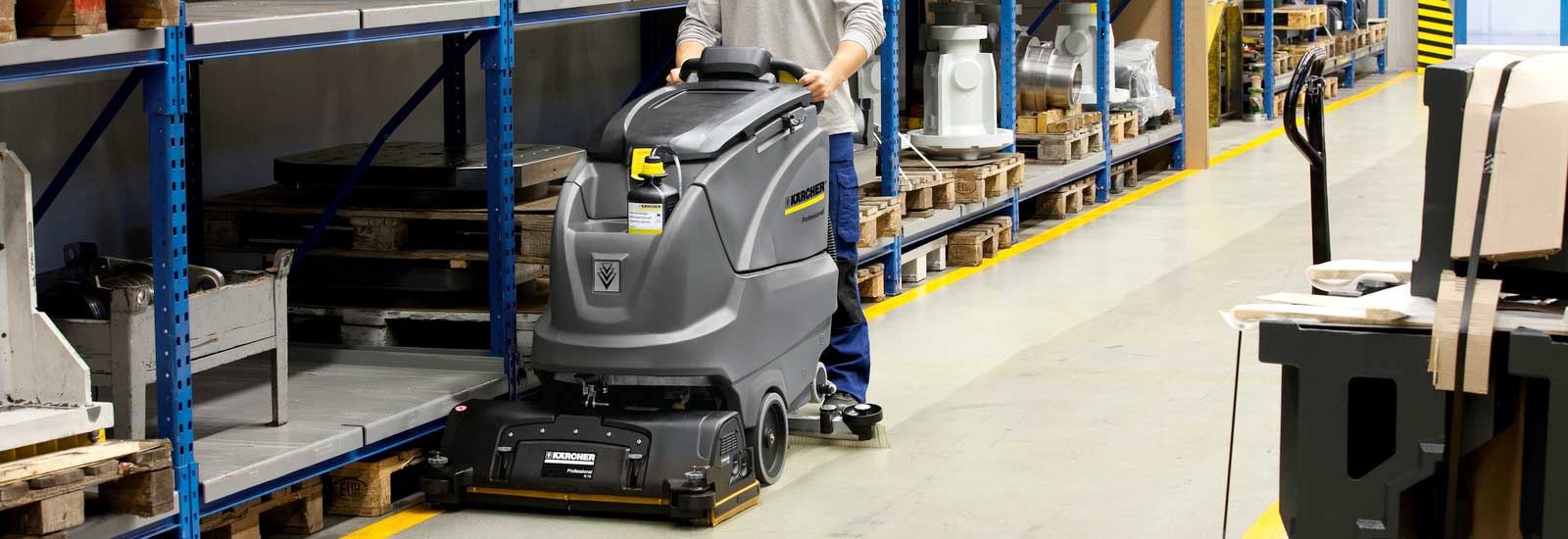
If you manage or work in a warehouse or logistics business, you already know how quickly standards can slip. A clean warehouse is a safer and more efficient place to work. When debris, dust or spillages are left to build up, small issues can quickly turn into serious problems – from slip hazards and damaged forklifts to obscured safety markings and costly repairs.
Proper warehouse cleaning supports safety, efficiency and cost control. Forklifts, pallet trucks, deliveries and people move through the same areas every day. Over time, this leads to a build-up of dust, loose packaging, tyre marks, spillages and debris – particularly on floors and around racking.
Without regular cleaning, warehouses face:
Regular warehouse cleaning helps you avoid this. Clean floors reduce slips, clear walkways make movement safer and less dust improves air quality and protects goods. You’ll also spend less time repairing damage caused by things that shouldn’t have been on the floor in the first place.
The cleanest warehouses don’t rely on big clear-outs once or twice a year. They build cleaning into everyday routines that staff can easily follow.
You don’t need anything complicated, you just need consistency. Deal with mess as it appears, clean the areas that get hit hardest, and schedule proper floor cleaning before dirt becomes ingrained.
Pay close attention to:
Those spots usually collect dust and debris first. If you keep them under control, the rest of the space is easier to manage.
There’s no single schedule that fits every warehouse or logistics centre, but most businesses work best with a mix of daily upkeep and planned deep cleaning.
Daily cleaning keeps things safe. Remove loose packaging, clear walkways and deal with spillages straight away. You don’t need spotless floors every day, but you do need floors people can walk and drive on safely.
Weekly cleaning is where you tackle build-up. This is when floors usually need proper scrubbing to remove tyre marks, oil residue and ground-in dirt. It’s also a good time to clean around fixed equipment and check that safety markings are still visible.
Periodic deep cleaning handles the things that don’t get daily attention. That includes high-level dust, warehouse racking, outdoor yards and loading areas. Leave this too long and it becomes harder (and more disruptive) than it needs to be.
Warehouse floors take the most wear and tear, so it’s important you take the right approach.
An industrial sweeper is the fastest way to collect dust, screws, plastic wrap and pallet fragments. This prevents debris from becoming airborne or damaging equipment.
The KM 90/60 Sweeper is ideal for warehouses, loading bays and outdoor areas. It efficiently collects dirt and debris across large floor spaces, helping reduce downtime and manual labour.
Once debris is removed, a warehouse floor cleaning machine such as a scrubber dryer removes ingrained dirt, oil and tyre marks.
The B 150 Scrubber Dryer is particularly effective in warehouses as it scrubs and dries the floor in a single pass. This helps reduce slip risks and allows floors to be used again quickly – something manual mopping can’t achieve safely or efficiently.
The right warehouse cleaning equipment depends on your floor space, layout and cleaning frequency. Most warehouses use a combination of machines.
| Machines to hire | What it does |
| Sweepers (we recommend the KM 90/60) |
|
| Scrubber dryers (we recommend the B 150) |
|
| Industrial vacuums (browse our range) |
|
| Pressure washers (browse our range) |
|
Floors aren’t the only problem. Dust quickly builds up on racking, beams and ledges, especially in busy or high-bay warehouses.
According to research by the British Safety Council, exposure to workplace dust and harmful airborne substances has been linked to around 12,000 deaths annually in the UK. Managing dust doesn’t just protect your stock, it also protects the air quality and helps to keep your employees safe.
Follow our best practice tips:
Follow our daily, weekly and periodic cleaning checklists to keep on top of things.
Daily
Weekly
Periodic (bi-weekly or monthly)
Hiring industrial cleaning equipment can give your warehouse access to professional machines without the upfront investment, while servicing and maintenance are included.
If you’re not sure what you need, speak to our team. They can help you choose equipment that fits your warehouse and your cleaning routine.
Some of our most popular models for warehouses are KM 90/60 sweeper and the B 150 scrubber dryer. Our warehouse and logistics customers report that they handle dust, debris and drying efficiently. Learn more here.
Keep on top of daily cleaning tasks, and plan a deeper clean of warehouse floors once a week. Racking and high-level areas depend on dust levels and activity but should be cleaned periodically before build-up becomes a problem.
We pride ourselves on being able to offer the following to all our valued customers:
– Next Day Delivery anywhere in the UK (subject to location & availability)
– Free site visits and advice, ensuring you hire the right machine for the application
– Flexible hire periods, from 2 days to 5 years
– Maintenance included as standard
– Full training on delivery of your equipment
– Quality, modern fleet, maintained to ISO9001:2008 standards
– Breakdown response
With a fleet of equipment growing daily, we’re ready to take your hire. Call us on 0345 222 8000 or fill out a simple enquiry form.
Clean Sweep Hire Trading As Kärcher Hire
Company Registration Number: 06523042

Opening Times:
Mon-Fri - 8.30am - 5.00pm