Keeping a commercial space clean is about far more than appearance. In environments where hygiene standards have to stay consistently high, surface dirt is only half the story. The germs, allergens and grease you can't see are often the bigger problem, and they're exactly the things that traditional mopping and wiping tend to move around rather than remove.
That's where steam cleaning earns its place. Instead of relying on chemicals to do the work, a steam cleaner uses heat to lift dirt, cut through grease and kill bacteria in a single pass. It's a method that suits offices, kitchens, healthcare settings, gyms, vehicles and any space where a deeper, more hygienic clean matters.
In this guide, we'll walk through everything you need to know about steam cleaning – including how it works, what's inside the machine, the benefits, how to use one properly and where it performs best. We'll also cover how to choose the right model and why hiring is often the most practical option.
What is steam cleaning?
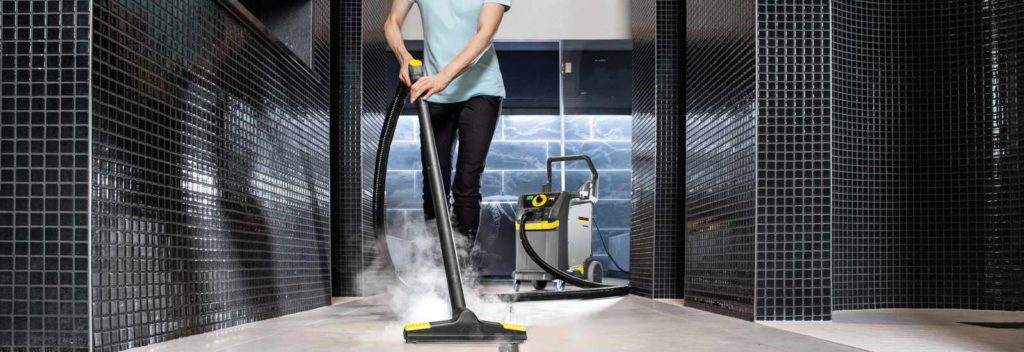
Steam cleaning is a method that uses hot, pressurised vapour to clean and sanitise surfaces. Rather than scrubbing dirt away with detergents, the steam loosens grime and dissolves grease while the heat kills bacteria and other contaminants on contact.
A steam cleaner can be used across a wide range of hard surfaces, including countertops, floors, tiles, bathroom fixtures and kitchen areas. It's a versatile tool that suits both everyday maintenance and deeper periodic cleaning.
It's worth clearing up one common point of confusion early on. A steam cleaner is not the same as a carpet cleaner. A carpet extractor injects water and a cleaning solution onto the surface before drawing the debris back up, whereas a steam cleaner relies on heat and low-moisture vapour. Both have their place, but they work in very different ways.
How does steam cleaning work?
If you've ever wondered how steam cleaning actually works, the process is more straightforward than you might expect.
Inside the machine, a boiler heats water well beyond boiling point, to around 115 degrees Celsius. That heat turns the water into pressurised steam, which is forced out through an attachment as a low-moisture vapour. As the vapour makes contact with a surface, it permeates and lifts dirt, grease, mould, stains and pathogens.
Because the steam is low in moisture, surfaces dry quickly and there's usually no need to wipe everything down afterwards. That fast drying also reduces the risk of mould forming, which is a real advantage in damp-prone areas like washrooms and kitchens.
On professional machines, a direct water feed refills the tank automatically, so you can keep cleaning without stopping to top up. The result is a fast, consistent clean that reaches into corners, seals and textured surfaces that a cloth simply can't.
Key components of a steam cleaner
Understanding what's inside a steam cleaner helps you get the most out of it. Here's a quick breakdown of the typical components.
Boiler and water tank
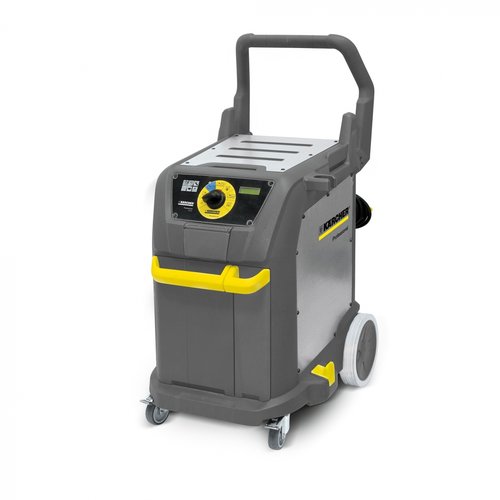
The boiler is the heart of the machine. It heats the water to the high temperatures needed to produce steam, while the water tank stores the supply. Tank capacity varies by model, and the larger the tank, the longer you can clean before refilling. The Kärcher SGV 8/5 steam vacuum cleaner, for example, has a five-litre tank to keep you going for longer between top-ups.
Steam outlet and pressure system
Steam is delivered through the outlet under pressure, and the more pressure a machine produces, the more effectively it cuts through grease and stubborn grime.
Attachments and nozzles
A good steam cleaner comes with a range of attachments for different jobs. Detail nozzles target grout lines and awkward corners, brush attachments help loosen heavier deposits, and microfibre pads are ideal for finishing surfaces and floors. Upholstery attachments extend the machine's use to soft furnishings, seating and fabric.
Suction and hose
Many professional Kärcher steam cleaners include a built-in vacuum, which removes loosened dirt and moisture as you go, leaving surfaces clean and dry. A long suction hose adds reach and flexibility. The Kärcher SGV 8/5 steam vacuum cleaner, for instance, has a four-metre suction hose, so you can reach awkward areas without constantly repositioning the machine.
Controls
Simple controls make a real difference day to day. Machines with a single control for all functions are quicker to learn and easier to hand over to other members of staff, which keeps training time to a minimum.
What are the benefits of steam cleaning?
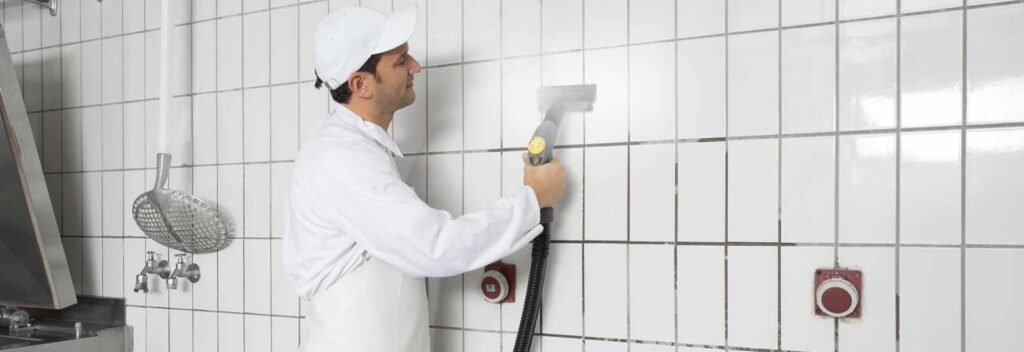
The benefits of steam cleaning go well beyond a clean-looking surface. For businesses, it can reduce costs, improve hygiene and make cleaning routines far more efficient.
It's chemical free
Steam cleaning relies on heat rather than detergents, so there's no need for harsh cleaning chemicals. That cuts your consumable costs, removes the need to store and handle hazardous products and leaves no toxic residue behind. It's a particular advantage in areas used by children, in food preparation spaces and anywhere chemical exposure is a concern.
It saves time and reduces labour
A steam cleaner speeds up the cleaning process considerably. With one control for all functions and quick warm-up times, your team can cover ground faster and spend less time on repetitive scrubbing. Over the course of a year, that efficiency adds up to a meaningful saving in labour hours.
It improves hygiene
Steam cleaning doesn't just shift visible dirt. The high heat kills bacteria and removes contaminants, which is essential in environments where hygiene standards are non-negotiable. Kärcher steam cleaners remove up to 99.999% of viruses such as Covid and influenza from hard surfaces, helping to reduce infections among staff and customers alike.
It's better for allergies and air quality
Cleaning chemicals can aggravate allergies and respiratory issues. Because steam cleaning is chemical free, it avoids that problem entirely. The steam also binds dust together rather than throwing it into the air, which helps keep the surrounding environment cleaner and more comfortable.
It's environmentally friendly
Steam cleaning uses very little water and no chemicals, which makes it a genuinely sustainable choice. A single litre of tap water creates around 1,700 litres of steam, enough to clean for roughly 20 minutes. Electricity is only needed while the water is heating, so energy use is kept low. For businesses working towards greener credentials, that matters to staff and customers more than ever.
It delivers a streak-free finish
Manual cleaning often leaves inconsistencies behind. Steam cleaning covers large areas quickly without streaking, and on floors it can leave a clean, shining finish that also helps protect the surface from wear over time.
It reaches difficult areas
The vapour is emitted at high velocity, which means it can reach into rubber seals, grout lines and tight corners that are almost impossible to clean by hand. Combined with the right attachment, this makes light work of the fiddly areas that usually get missed.
Does steam cleaning disinfect?
Steam cleaning both cleans and sanitises surfaces, which is one of the main reasons it's so widely used in hygiene-critical environments like hospitals.
It's worth understanding the difference between sanitising and disinfecting. Sanitising reduces germs to a safe level, while disinfecting aims for near-total elimination of bacteria and viruses. Steam cleaners sanitise effectively, particularly when using dry steam at high temperatures, and Kärcher machines are proven to remove up to 99.999% of viruses from hard surfaces.
The value of this is significant. Around 93,000 workers believe they caught Covid at work, so providing a healthy, hygienic environment protects your team and helps reduce sickness absence and the associated costs.
Customers also continue to take hygiene seriously, and visibly maintaining clean premises can strengthen their confidence in your business. This is exactly why many NHS facilities hire steam cleaning equipment, and if it's trusted to help disinfect a hospital setting, it's more than capable of handling demanding commercial environments.
How to use a steam cleaner
Steam cleaners are designed to be simple to operate, but using one correctly helps you get the best results and protect your surfaces. Here's how to approach the most common jobs.
How to use a steam cleaner on carpets
Start by removing furniture from the area to avoid damage, then vacuum thoroughly to lift loose debris, dust and hair. Fill the tank with water and, if recommended for your machine, the correct amount of cleaning solution. Avoid overloading the machine, as too much product can damage both the carpet and the cleaner.
Allow the machine to heat up and build pressure, then begin in the farthest corner of the room and work back towards the exit in straight lines so you're not stepping on cleaned areas. Move slowly to let the steam penetrate the fibres, and once finished, allow the carpet to dry fully, opening windows or using fans to speed things along.
How to use a steam cleaner on tiles
Remove loose dirt from the tiles first. For heavier grease, attach a microfibre cloth or a brush attachment. Work the steam over the surface to loosen grime, then use a detail nozzle or small brush along grout lines for precision. Take care with silicone grouting, as prolonged steam exposure can damage it. Finish by wiping the tiles with a clean, dry cloth to remove any residual moisture.
Sanitising surfaces
To sanitise, clear away any debris first, such as crumbs from countertops or dust from floors. Always test a small, inconspicuous area before starting, particularly on delicate surfaces like laminate. Move the steam cleaner slowly and evenly across the surface, avoiding lingering in one spot, and use a detail nozzle for intricate areas like hob edges and corners. Wipe down afterwards with a clean cloth to remove any loosened residue.
Walls and floors
For walls, an extendable hose lets you reach the tops of walls and ceilings safely without ladders. Move furniture away, then work from the top down. For floors, vacuum first to remove larger debris, let the machine warm up, then move the attachment slowly across the surface. Steam cleaning works well on vinyl, tile, sealed wood and most hard flooring, but always spot-check laminate, as high temperatures can cause poorly laid laminate to lift.
Where steam cleaners work best
Steam cleaning suits a broad range of commercial and industrial settings. Here are some of the environments where it really proves its worth.
Offices and workplaces
In offices, steam cleaning helps maintain both appearance and hygiene. It's ideal for refreshing carpets and soft furnishings, sanitising communal areas and tackling washrooms and kitchen spaces where germs build up. A regular deep clean helps keep shared environments healthier, which in turn supports lower sickness absence and a more professional workspace.
We recommend: the Kärcher SG 4/4 Steam Cleaner
Food production and commercial kitchens
Kitchens and food preparation areas are among the most demanding environments for hygiene. Steam cleaning cuts through grease and food residue while sanitising surfaces, all without the chemicals that can be a concern around food. It reaches into the seals, edges and tiled areas where bacteria thrive, helping you maintain the standards required for a strong food hygiene rating.
We recommend: the Kärcher SG 8/5 Steam Cleaner
Healthcare and care settings
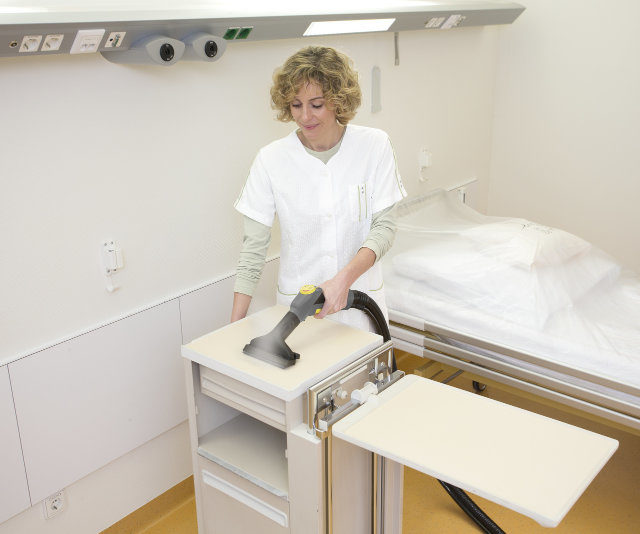
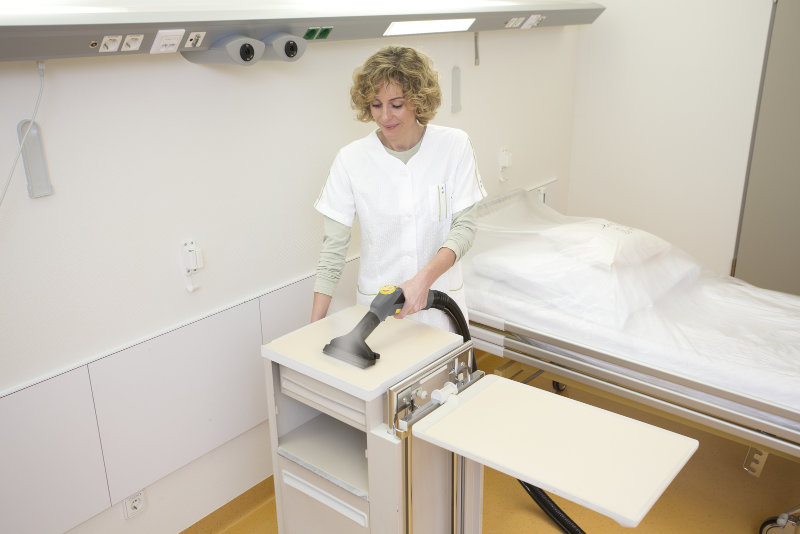
Hygiene is critical in healthcare, and steam cleaning's ability to remove the vast majority of viruses and bacteria from hard surfaces makes it a trusted choice. Its chemical-free approach also suits environments where patients, residents and staff may be sensitive to cleaning products.
We recommend: the Kärcher SG 8/5 Steam Cleaner
Gyms and leisure facilities
Changing rooms, showers, poolside areas and tiled surfaces all benefit from steam cleaning. The combination of heat and fast drying helps control bacteria and keeps high-moisture areas more hygienic, which is exactly what's needed in busy leisure settings.
We recommend: the Kärcher SG 8/5 Steam Cleaner
Car valeting and automotive
Steam cleaning is an excellent and often underused tool for professional valeters. On exteriors, a burst of hot, high-pressure vapour removes stubborn dirt and grime without the need for chemicals or expensive car soaps. Contrary to a common misconception, this is gentler on paintwork than rubbing with rags or sponges, which can pick up grit and cause scratches.
Inside the vehicle, attachments reach into vents, footwells and dashboards, and steam lifts dirt and allergens from upholstery far more thoroughly than wiping down. Once finished, there's no complicated drying process – simply open the windows and let the car dry in a safe, shaded spot.
We recommend: the Kärcher SG 4/4 Steam Cleaner
Retail and hospitality
In customer-facing environments, steam cleaning keeps floors, tiles and surfaces looking professional while maintaining the hygiene standards that customers increasingly expect. The streak-free finish and fast drying make it practical to use even when premises are in regular use.
We recommend: the Kärcher SG 4/4 Steam Cleaner
How to choose the right steam cleaner
If you're working out how to choose a steam cleaner, it helps to focus on a few key factors that affect day-to-day performance.
- Warm-up time matters because it determines how long you wait before you can start. A faster warm-up keeps your team productive rather than standing around. The Kärcher SGV 8/5 heats up in minutes, so cleaning can begin almost straight away.
- Pressure is important. Higher pressure means better performance on grease and ingrained grime.
- Tank capacity affects how long you can clean before refilling, so think about the size of the areas you'll be covering. A larger tank suits bigger spaces and reduces interruptions.
- Ease of use is easy to overlook but important. A machine with a single control for all functions, high handles and large wheels is quicker to train staff on and easier to move around your premises.
- Consider the surfaces and tasks involved. Hard surfaces like countertops, tiles, floors and kitchens are well suited to steam, but unsealed floors and certain delicate materials can be damaged. Always check suitability and spot-test before committing to a full clean.
Steam cleaner vs other cleaning methods
When you compare steam cleaning to other approaches, the differences become clear quickly.
Steam cleaner vs chemical cleaning
Traditional chemical cleaning relies on detergents to break down dirt, which means ongoing product costs, storage requirements and potential exposure risks. Steam cleaning achieves a deep, hygienic clean using heat alone, removing those costs and concerns while still killing bacteria and lifting grease.
Steam cleaner vs carpet extractor
These two are often confused, but they do different jobs. A carpet extractor injects water and solution into the carpet before drawing it back out, making it the right tool for deep carpet and upholstery cleaning. A steam cleaner uses low-moisture vapour and is more versatile across hard surfaces, sanitising and detailed work. Many businesses benefit from having access to both, depending on the task at hand.
Common mistakes to avoid when it comes to steam cleaners
A few simple mistakes can affect how well your steam cleaner performs. Overfilling the tank is one, as steam forms best when the tank isn't completely full. Using cold water when warm water would heat faster is another, costing you time and energy. Moving the attachment too quickly, or lingering too long in one spot, can also cause problems – the former reduces effectiveness, while the latter risks damaging delicate surfaces.
It's also worth using distilled water if your premises has hard water, as this prevents mineral build-up inside the machine. Vacuuming before steaming helps the steam work more effectively, and emptying the tank after use keeps the machine clean and ready for the next person. Finally, always avoid using a steam cleaner on untreated wood, unsealed concrete or delicate fabrics unless the manufacturer specifically recommends it.
Should you hire or buy a steam cleaner?
This usually comes down to how often you need the machine and how your cleaning requirements change over time.
Buying a steam cleaner outright can cost thousands of pounds, with ongoing maintenance and servicing on top. For businesses with constant, predictable demand, that can be a worthwhile investment.
For many others, hiring a steam cleaner is the more flexible and cost-effective option. It gives you access to a professional machine without the upfront outlay, and it spreads the cost in a way that's easier on cashflow. Servicing and maintenance are typically included, so the upkeep isn't your responsibility, and you can scale up or down as your needs change.
Hiring is often the practical choice in situations such as seasonal deep cleans, one-off site resets, busy periods when standards need to stay high, or temporary projects where buying equipment would create unnecessary cost. It also lets you try a machine before committing to a purchase, so you can be confident it's right for your needs.
Hiring a steam cleaner with Kärcher Hire
Cleaning shouldn't be a burden on your business. With the right equipment in place, maintaining clean, hygienic premises becomes a routine part of your operation rather than a constant challenge.
With over 30 years of experience in industrial cleaning equipment hire, Kärcher Hire makes accessing professional-grade machines straightforward. Whether you need a steam cleaner for a one-off deep clean or ongoing maintenance, we offer tailored rental solutions to suit your environment.
If you're not sure which option is right for your business, our team can help you find a practical solution that fits your environment and keeps your premises clean, hygienic and compliant. Take a look at our steam cleaners for hire and contact our team to discuss your requirements.
Steam cleaner FAQs
What is a steam cleaner used for?
A steam cleaner is used to deep clean and sanitise hard surfaces using hot, pressurised vapour rather than chemicals. It's ideal for floors, tiles, kitchens, washrooms, upholstery and vehicles, and it's widely used in offices, healthcare, food production, gyms, retail and automotive settings where hygiene matters.
Does steam cleaning kill germs?
Yes. The high temperature of the steam kills bacteria and removes contaminants on contact. Kärcher steam cleaners remove up to 99.999% of viruses such as Covid and influenza from hard surfaces, which is why they're trusted in healthcare and food environments.
Do you need chemicals to use a steam cleaner?
No. Steam cleaning relies on heat rather than detergents, so in most cases no chemicals are required. This makes it more cost-effective, better for air quality and a more environmentally friendly choice.
Can steam cleaners be used on all surfaces?
Steam cleaners are suitable for most hard surfaces, including sealed floors, tiles, countertops and kitchen areas. However, they shouldn't be used on untreated wood, unsealed concrete or delicate fabrics unless the manufacturer recommends it. Always spot-test laminate and silicone before a full clean.
Are steam cleaners easy to use?
Yes. Most professional steam cleaners are designed to be simple to operate, often with a single control for all functions. Once your team understands the basics, they're easy to use as part of a regular cleaning routine, which is why staff training time is minimal.
How long does a steam cleaner take to warm up?
It depends on the model, but professional machines warm up quickly. The Kärcher SGV 8/5, for example, heats up in just a few minutes, so your team can start cleaning with very little delay.
Is steam cleaning environmentally friendly?
Yes, because steam cleaning uses no chemicals and very little water, with a single litre of tap water producing around 1,700 litres of steam. Electricity is only used while the water heats, keeping energy consumption low.
Do I need training to use a steam cleaner?
In most cases a quick introduction is enough to get started. When you hire with Kärcher Hire, we provide free training with every delivery, so your team is confident and safe from day one.