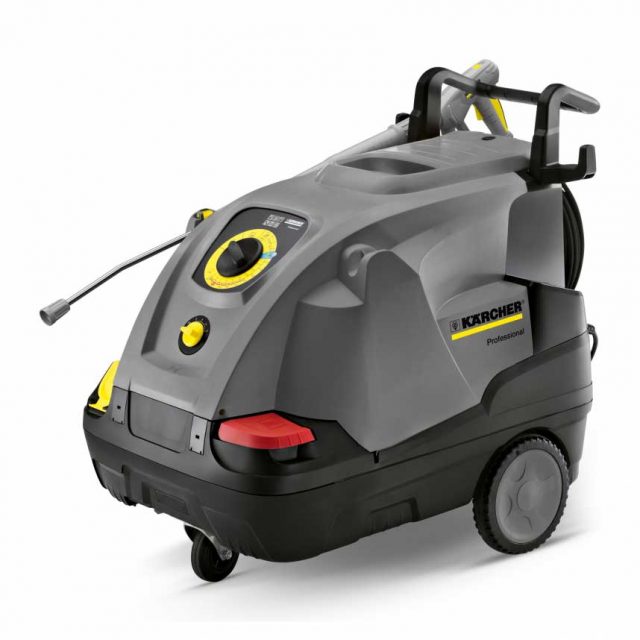
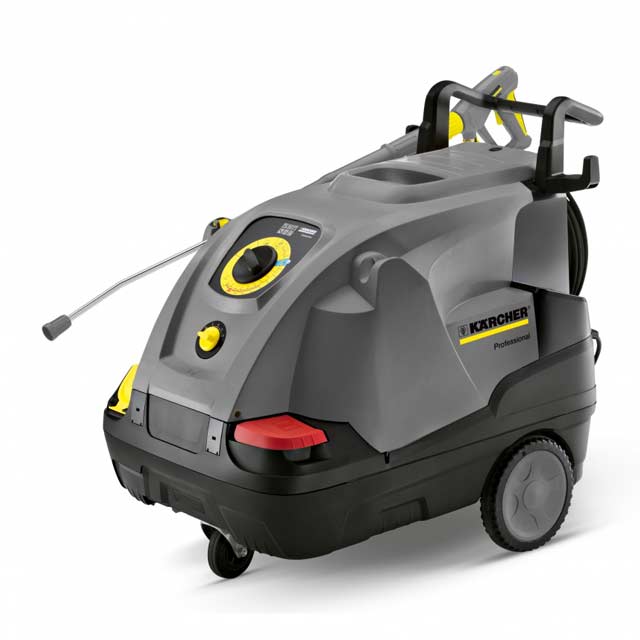
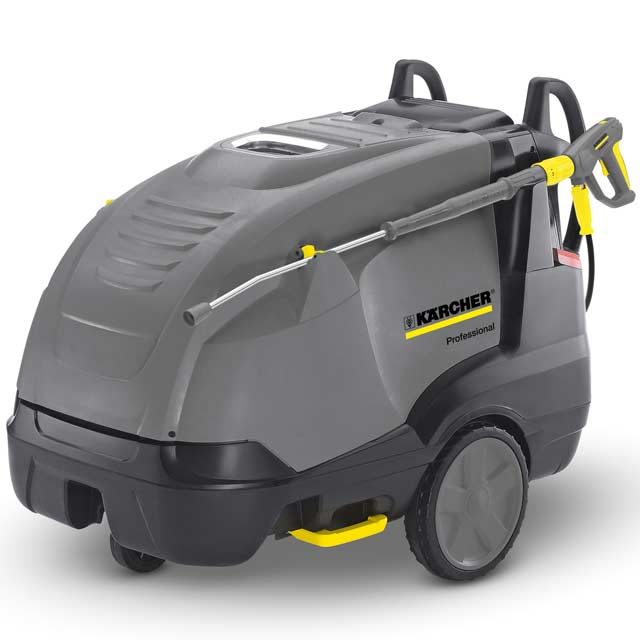
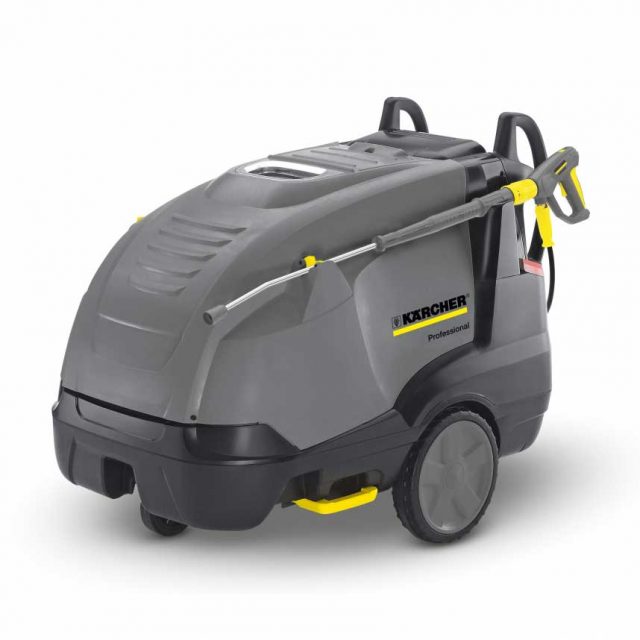
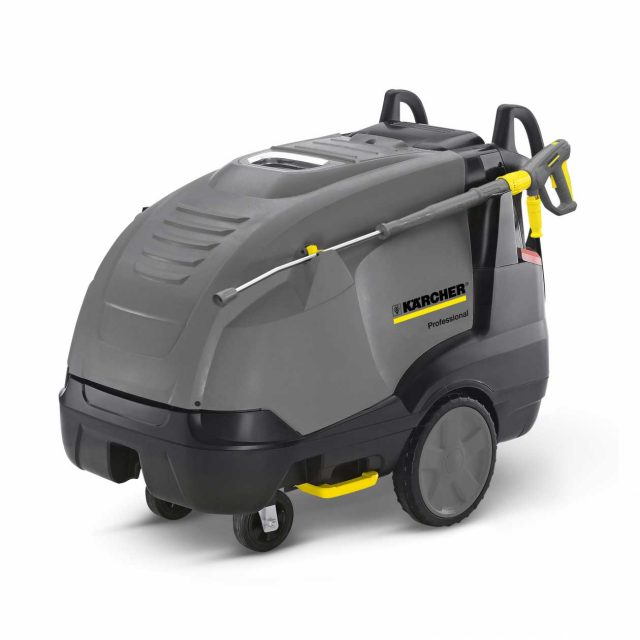
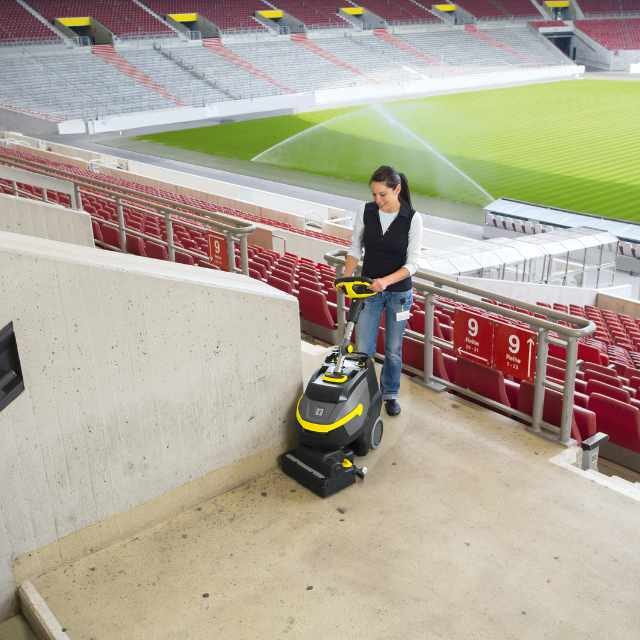
What is an industrial pressure washer?
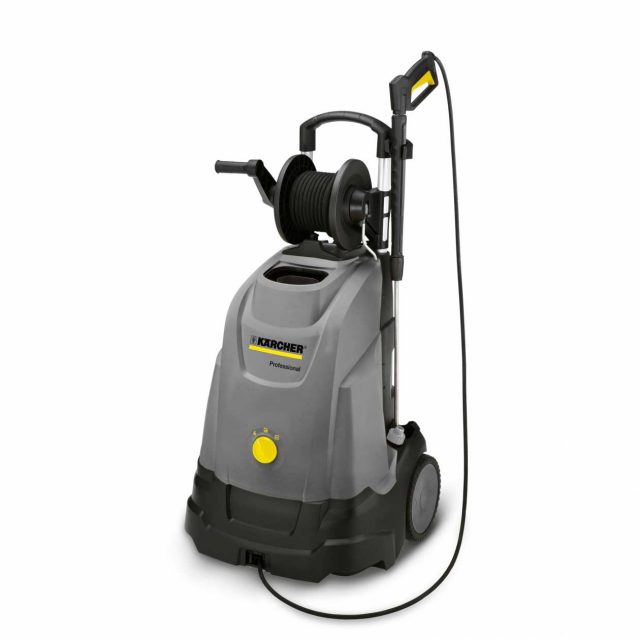
An industrial pressure washer is a high-powered machine that forces water through a nozzle at very high pressure. This is done to remove dirt, grime, grease, oil and other stubborn substances from surfaces. Unlike domestic models, industrial machines are built for sustained, heavy-duty use across large areas and in demanding environments.
Pressure washer technology has been around since 1950 and has advanced considerably over the decades. Modern Kärcher HDS pressure washers can operate at up to 7,250 PSI of pressure.
That's enough not just to clean, but to also strip concrete if needed. Pressure washers have been used to perform the largest ever clean of the London Eye, along with the Christ the Redeemer statue in Brazil and the faces at Mount Rushmore.
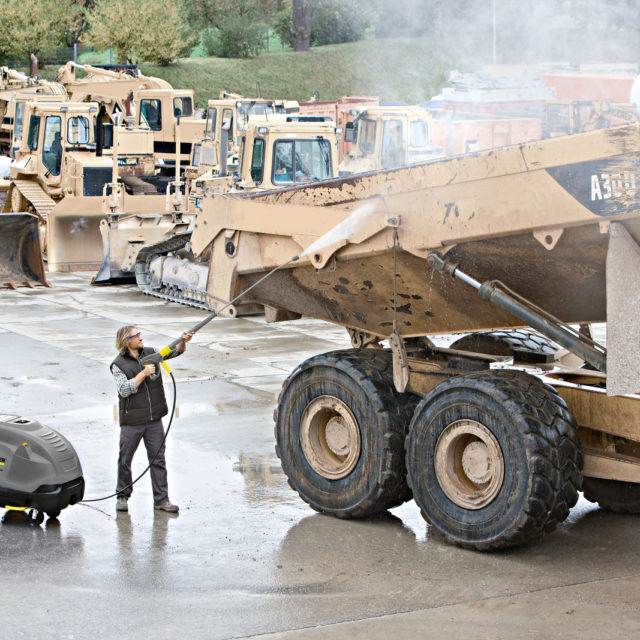
For everyday commercial use, they are best used for faster, deeper, more hygienic cleaning across a huge range of applications – from warehouse floors and factories to car forecourts, farm equipment and food preparation areas.
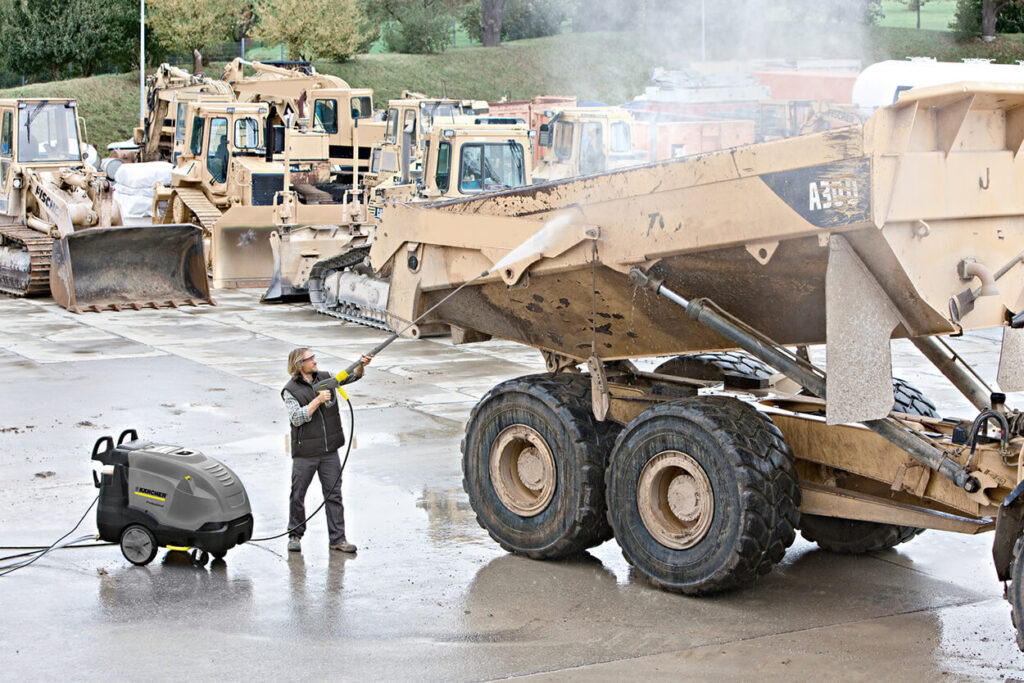
Why use a pressure washer for industrial cleaning?
Industrial environments generate a lot of dirt and contamination that traditional cleaning methods can't always handle. Mops, buckets and manual scrubbing can be effective for light, everyday cleaning, but they fall short when it comes to ingrained grease, oil residue and built-up grime. Particularly if you have large areas that need to be covered quickly.
Industrial pressure washers can help you with:
- High-performance results on tough surfaces. The high-pressure water jet lifts and removes deep-seated dirt that manual methods leave behind. This is particularly effective on porous materials such as brick, concrete and marble, where contamination becomes embedded in the surface and ordinary cleaning solutions cannot reach.
- Speed and efficiency. Large areas that would take a cleaning team hours to work through manually can be covered in a fraction of the time. Hot water models offer time savings of up to 35% compared to standard cold-water machines because heat accelerates the loosening of grease and grime.
- Improved hygiene. Hot water pressure washers can significantly reduce bacteria without the need for heavy use of chemical disinfectants. This is especially valuable in food production facilities, commercial kitchens and healthcare environments, where hygiene standards are non-negotiable.
- Reduced chemical use. Because of their cleaning power, industrial pressure washers often require less detergent than traditional methods, or none at all for many applications. This reduces running costs and environmental impact.
- Versatility. A single machine can be used on floors, walls, machinery, vehicles, outdoor surfaces and more. The right accessories (nozzles, surface cleaners, lances) extend what the machine can do even further.
Hot vs cold water pressure washers
Both hot and cold pressure washers have their uses, but the right choice depends on what you're cleaning.
Cold water pressure washers
Cold water machines are the more straightforward option and are well-suited to a wide range of general cleaning tasks. They're typically more portable and compact than hot water equivalents, and diesel or petrol-powered models can operate completely independently of a mains water or power supply. They also offer lower running costs.
Cold water pressure washers are a solid choice where the dirt is mineral-based, such as soil, dust and mud. They are a popular choice with agriculture and construction businesses, but they do have some limitations. Where grease, oil or fats are involved, cold water alone is a lot less effective – and a hot water pressure washer might be a better fit.
Hot water pressure washers
Hot water pressure washers (such as the Kärcher HDS range) use a heated water supply to break down grease, fats and oils much more quickly and thoroughly than cold water can. Hot water machines are the preferred choice for food production facilities, commercial kitchens, and the automotive sector.
Increasing the water temperature allows the machine to work at lower pressure while still achieving superior results, which means less risk of surface damage alongside better cleaning performance.
Electric vs diesel: which power source is right for you?
Beyond choosing a hot or cold machine, you'll also need to consider how you'd like it to be powered. The two main options are electric and diesel (or petrol), and the right choice depends on where you're working, how often and at what scale.
Electric pressure washers
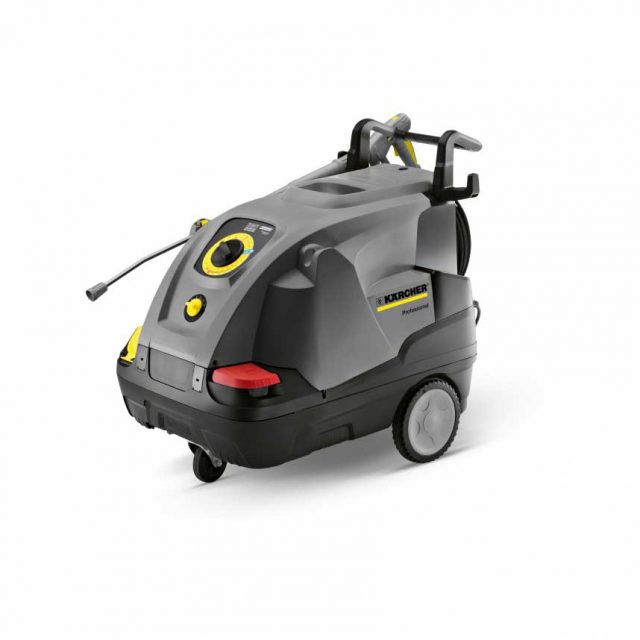
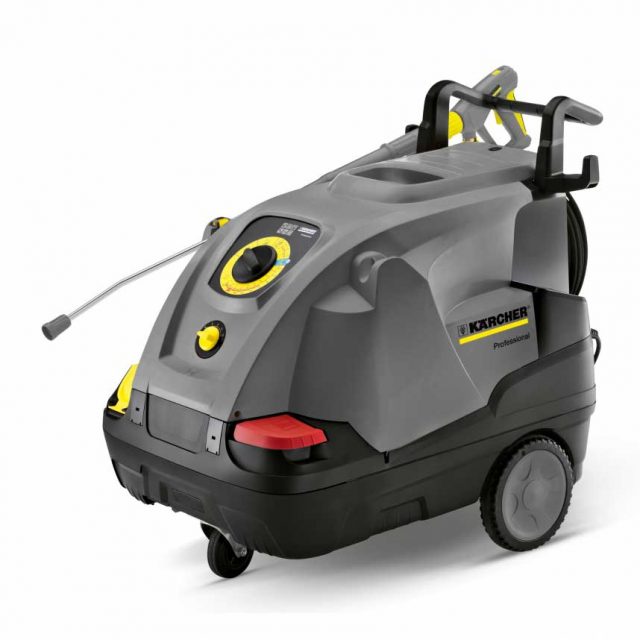
Electric machines, such as the Kärcher HDS 7/10-4 M, are lighter, quieter and easier to manoeuvre than their diesel counterparts.
Electric models are well-suited to mid-range commercial applications, daily cleaning tasks and environments where noise levels matter. They're reliable and consistent performers for regular use in fixed locations with access to mains power.
Best for: Indoor use in factories, warehouses, food facilities and any enclosed space since they produce no exhaust fumes.
Diesel pressure washers
Diesel-powered machines, such as the Kärcher HDS 8/20 D, are built for heavy-duty, large-scale and remote cleaning. They don't rely on a mains power supply. As long as you have fuel and water, they can operate anywhere.
Diesel machines are more powerful than most electric equivalents and can run continuously for longer periods, making light work of large surfaces. Their higher flow rate means more water is delivered, which is ideal for covering larger areas.
Best for: Outdoor use on construction sites, agriculture, council cleaning and general outdoor cleaning.
Trailer pressure washers: mobile cleaning at scale
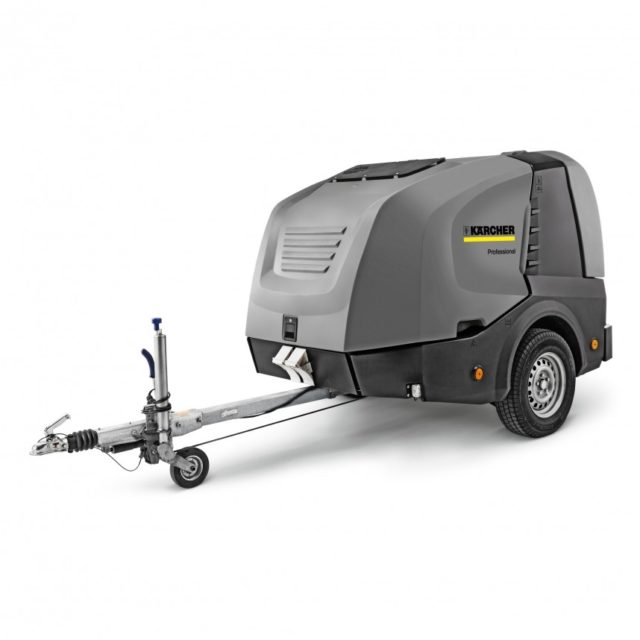
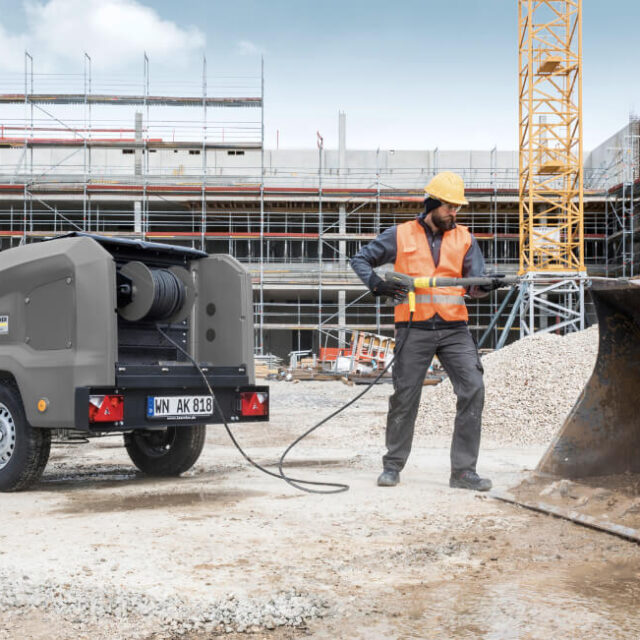
For businesses that need to take high-pressure cleaning on the road (or to sites where neither power nor water is readily available) trailer pressure washers are an ideal choice.
The Kärcher HD 9/23 and the HDS 17/20 trailer pressure washers are two of the most capable machines in this category. They are used by councils, construction teams, industrial maintenance contractors and agricultural businesses. Trailer pressure washers are designed to handle a range of outdoor cleaning challenges, from machinery and marble steps to building sites and large concrete surfaces.
We recommend the HDS 17/20 – featuring a 500-litre water tank, 100-litre fuel capacity and a powerful 19kW Yanmar diesel engine, delivering up to 30 minutes of uninterrupted full-power cleaning. A 30-metre high-pressure hose gives considerable reach, and two supply reels allow for flexible deployment on site.
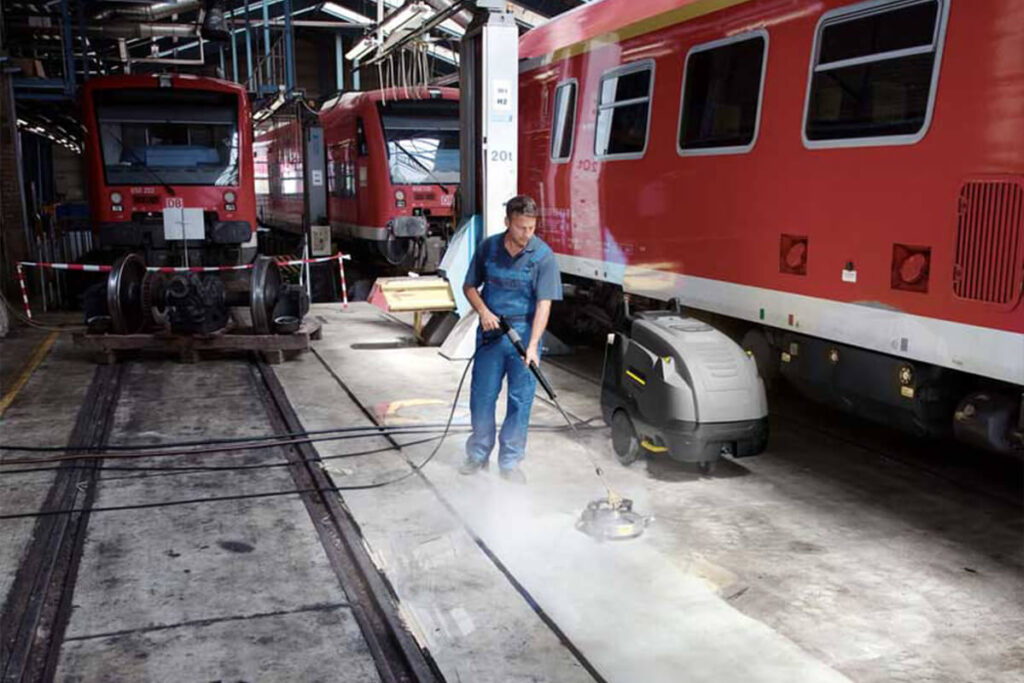
How industrial pressure washers could benefit your industry
Industrial pressure washers are used across a wide range of sectors. Different industries have specific cleaning requirements, and the right machine depends on what you're dealing with. Here are some of the most common sectors we work with.
Food production and commercial kitchens
Hot water pressure washers are essential in environments where grease, food residue and bacteria must be eliminated to meet hygiene regulations. They clean without the need for heavy chemical use, reducing both cost and environmental impact.
Agriculture and farming
Cold water machines are well-suited to removing mud, soil and organic waste from barns, vehicles and farm equipment. Diesel-powered models offer the independence required in rural locations without reliable power supplies.
Construction sites
Pressure washers tackle the concrete residue, dust, mud and heavy grime that accumulates on machinery, tools, scaffolding and site surfaces. Diesel-powered and trailer models are the natural choice for sites without fixed utilities.
Warehouses and logistics
Factory floors, loading bays and concrete yard areas benefit from regular pressure washing to remove oil, tyre marks and general industrial dirt. Large areas can be covered efficiently, maintaining hygiene and safety standards.
Automotive workshops and dealerships
Removing oil, grease and vehicle contaminants from workshop floors, service bays and forecourts requires the cutting power of a hot water machine. Models with precise pressure control protect painted surfaces while still delivering a thorough clean.
Retail and supermarkets
Shopfronts, customer entrances, loading areas and outdoor spaces all benefit from regular pressure washing to maintain a professional appearance and remove chewing gum, staining and weathering.
Public sector
Councils and public authorities regularly use trailer pressure washers for pavement cleaning, chewing gum removal, public building maintenance and outdoor surfaces in high-footfall areas across the UK.
How to get the most out of your pressure washer
Industrial pressure washers are powerful and highly effective machines, but how you use them can make all the difference. Here are five practical tips to help you get the most out of yours.
- Control the pressure for the surface you're cleaning. Industrial machines deliver significant force, and applying too much to a delicate surface (painted finishes, soft stone or certain tiles) can cause damage. Always start a few feet back and test a small area first, moving the nozzle side to side to check for any adverse effects. Most machines allow pressure to be adjusted at the nozzle. Start low and increase only as needed.
- Choose the right nozzle. Most industrial pressure washers come with a set of interchangeable nozzles for different tasks. As a rule, the narrower the nozzle angle, the more concentrated and powerful the jet. A wide-angle nozzle is suitable for rinsing and light cleaning, while a narrower jet gives more force for heavy-duty work. Detergent nozzles are specifically designed for applying cleaning solution at low pressure before rinsing.
- Use only approved cleaning agents. Stick to detergents and cleaning products supplied or approved by the manufacturer. Unsuitable chemicals can damage the machine's internal components and may void any maintenance or service agreement. In many cases, the power of an industrial machine means you won't need chemical assistance at all – the hot water and pressure alone will do the job.
- Plan your cleaning before you start. Think about the layout of the area and what needs to be protected, such as windows or light fittings. Fragile items can be damaged by direct contact with a high-pressure jet. Identify any drains that need to remain clear and consider where wastewater will run. Keep the wand pointed downward and your finger off the trigger when moving between areas.
- Spray in a consistent pattern. Work from left to right (or right to left) in smooth, overlapping strokes, just like painting a wall. Random or erratic spraying leads to missed patches and uneven results. When you're cleaning a vertical surface, always start at the top and work downward to prevent dirty water running back over areas you've already cleaned.
Should you hire or buy a pressure washer?
For businesses that need industrial-grade pressure washing capability, the question of whether to buy or hire usually comes down to frequency of use, budget and flexibility.
Purchasing a machine outright means a significant upfront cost, followed by ongoing expenses for maintenance, servicing and storage. If your cleaning needs are constant and predictable, ownership can make sense over the long term. But this isn't the case for most businesses.
Pressure washer hire gives you access to a professional, well-maintained machine without the capital outlay, the storage requirement or the servicing burden. You pay for the time you need the machine and nothing more. If your needs change, you can upgrade or switch to a different model. And if the machine develops a fault, support and replacement are handled for you.
There are also situations where hire is simply the most practical option regardless of your long-term cleaning needs:
- One-off or project-based cleaning. A deep clean at the start of a contract, a seasonal reset or a post-construction site clean all call for professional equipment for a defined period. Hire gives you exactly what you need without long-term commitment.
- Seasonal demand. Some industries see cleaning requirements increase at particular times of year. Rather than investing in equipment that sits idle for months, hire lets you scale up when needed and step back when demand drops.
- Temporary sites. For construction projects, events or short-term operations, buying equipment creates unnecessary cost and logistical complexity. Hire is the practical solution.
- Evolving requirements. If your cleaning operations are growing or changing, hire allows you to access the right machine at each stage rather than committing to a model that may not suit you in the future.
The benefits of pressure washer hire with Kärcher Hire
Hiring a pressure washer from Kärcher Hire comes with a package of practical benefits that go beyond simply having access to the machine.
Next-day delivery across the UK
Our machines arrive ready to use, delivered directly to your site. There's no waiting, no procurement process and no setup time beyond a brief operator introduction.
Free training with every delivery
Every delivery includes a demonstration from one of our trained drivers, covering safe and effective operation of the machine. You don't need specialist knowledge before the machine arrives – we'll make sure your team knows how to use it properly.
Full maintenance and servicing support
When you hire with us, you don't need to worry about repairs or upkeep. Our machines are maintained to ISO 9001 standards, and full servicing support is included as standard. If something goes wrong, we respond quickly – including replacement machines where a first-time fix isn't possible.
Flexible hire periods
Whether you need a machine for two days or two years, we can accommodate it. Short-term, long-term and contract hire options are all available.
Expert advice
Not sure which machine is right for your application? Our team will help you identify the best option for your environment, the surfaces you're cleaning and the nature of the contamination involved. We want you to get the right result, not just any machine.
Improved appearance and safety for your business
A clean exterior and clean working environment makes a real difference to customer perceptions, staff morale and to safety. Pressure washing removes the mould, staining, chewing gum and weathering that accumulates over time and is hard to shift by any other means.
Find the right pressure washer for your business
Whatever your industry, whatever your surfaces and whatever your cleaning schedule, there's a Kärcher pressure washer that fits. From compact electric machines for regular indoor use to self-contained trailer units for remote and large-scale outdoor work, we have the equipment and the expertise to help you find the right solution.
With over 30 years of experience in industrial cleaning equipment hire, flexible short and long-term hire options, next-day UK delivery and full servicing support, Kärcher Hire makes accessing professional-grade equipment straightforward.
Take a look at our pressure washers for hire or contact our team to discuss your project. We'll help you identify the right machine, get it to you quickly and make sure your team is ready to use it from day one.
Industrial pressure washer FAQs
What is an industrial pressure washer used for?
Industrial pressure washers are used for heavy-duty cleaning of commercial and industrial surfaces, including floors, machinery, vehicles, outdoor areas and hard-to-clean materials like concrete, brick and tile. They're common across manufacturing, agriculture, construction, food production, retail and public sector environments.
How much does pressure washer hire cost in the UK?
Hire costs vary depending on the type and size of machine and the hire period. Smaller electric models are typically the most affordable. Larger diesel and trailer machines carry a higher daily or weekly rate but cover more ground and tackle tougher jobs. Hiring from Kärcher Hire starts from as little as £100 per week, and our team can provide a specific quote based on your requirements.
Are industrial pressure washers safe to use?
Yes, when operated correctly with appropriate training. The high-pressure jet is powerful enough to cause injury if directed at skin, so all operators should receive a briefing before use and follow safe operating procedures. At Kärcher Hire, we provide free training with every delivery to ensure your team is confident and safe from day one.
Can pressure washers be used on all surfaces?
Most hard surfaces can be cleaned with a pressure washer, but the pressure and nozzle type need to be matched to the material. Softer surfaces, painted finishes or delicate materials require lower pressure and wider nozzle angles. Our team can advise on the right settings for your specific application.
Do I need to use detergents?
Not necessarily. The power of an industrial machine, particularly hot water models, means that many cleaning jobs can be completed effectively with water alone. Where detergents are used, it's important to choose products that are approved for use with your machine to avoid damage.